
大批量产品High-volume parts
关注刀模耐磨性与结构强度。Focus on die wear resistance and structural strength.
- 参考产品:雕刻刀模Suggested product: engraved die
- 材料:DC53 钢材Material: DC53 steel
- 模具公差参考:±0.03 毫米Die tolerance reference: ±0.03 mm
技术支持Support
从选型和结构原理,到使用后的防锈与保养,掌握平板刀模的基础应用知识。From selection and structural principles to rust prevention and care after use, the basics of working with flatbed dies.
选型参考Selection reference
关注刀模耐磨性与结构强度。Focus on die wear resistance and structural strength.
兼顾尺寸要求与制作成本。Balancing dimensional requirements and tooling cost.
选择适用范围较广的胶板刀模。Choose the more widely applicable plastic-board die.
按厚度组合木板与刀片高度。Combine the board and blade height according to thickness.
选型需综合材料、厚度、尺寸要求、批量与机台条件,以上为应用参考。Selection depends on the material, thickness, dimensional requirements, production quantity and press conditions. The above is an application reference.
吸废原理Waste ejection
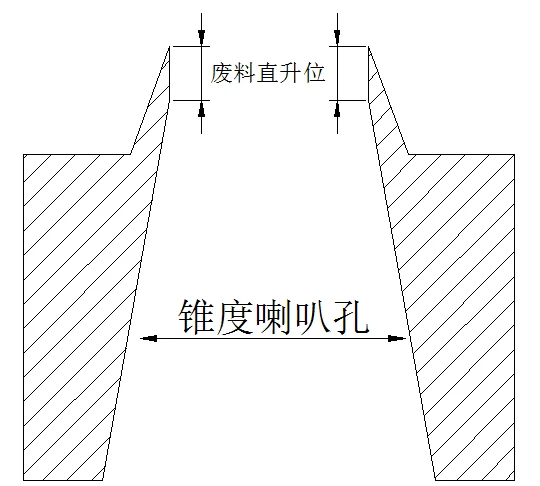
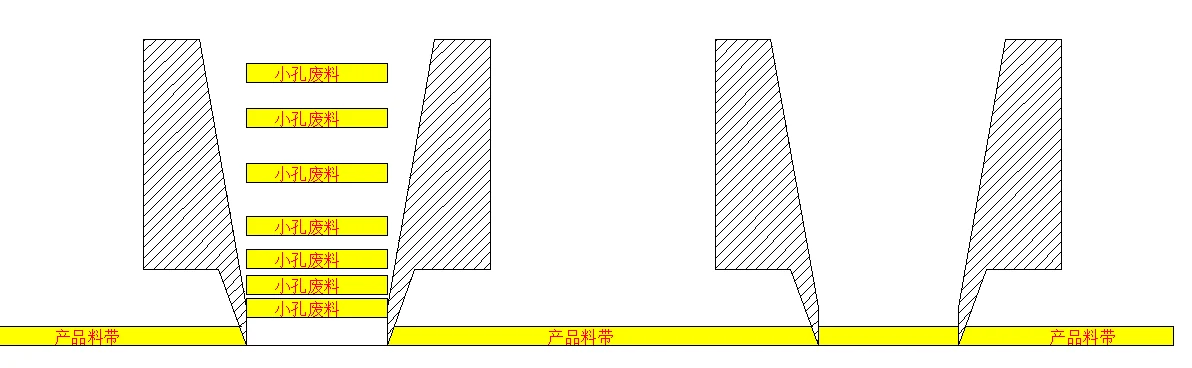
将吸废孔设计为镂空结构,利用刀模卡料,使废料保留在孔内。持续冲压时,废料逐个顶入,形成吸废效果。孔内角度会根据材料、厚度和形状调整。The waste holes are cut as through-openings so that the die holds the cut material and keeps waste inside the holes. Under continuous punching, waste is pushed in piece by piece to create the ejection effect. Hole angles are adjusted to suit the material, thickness and shape.
吸废模通常需要铝板、铝条等构成的底座储存废料,具体结构按使用需求确定。A waste-ejection die usually needs a base made of aluminium plates and bars to store the waste; the actual structure depends on how it is used.
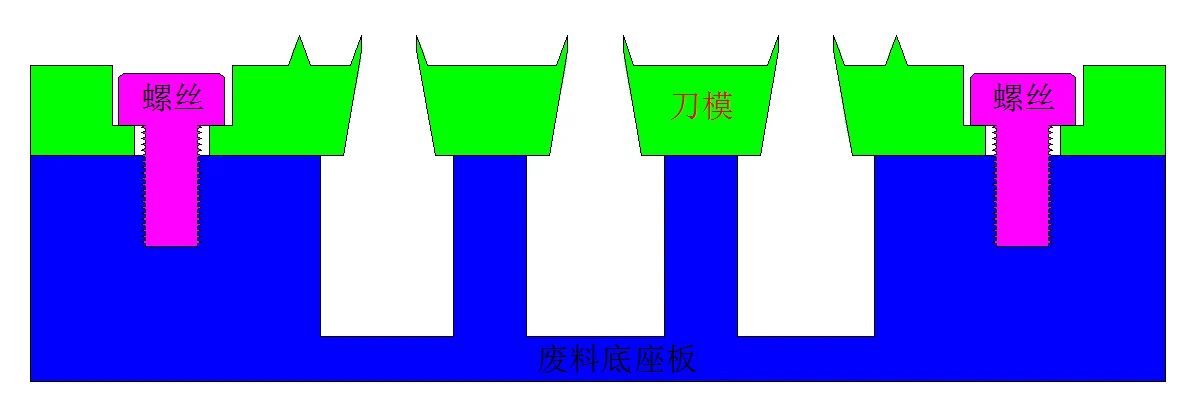
模具固定在机器上模板。使用中,清废可通过气管吹气或人工捅出废料完成,是常见的使用方式。The die is fixed in the upper station of the press. During use, waste is cleared by an air blast or pushed out by hand, which is the common arrangement.
模具固定在下板、刀锋朝上,并在下模板开通孔。废料通过机器孔位向下排出,适合较大废料的自动落料。The die is fixed in the lower station with the blade facing up, and the lower plate is drilled with through-holes. Waste drops down through the openings in the press, which suits automatic drop-out of larger waste.
使用保养Care
刀模出厂时通常涂有防锈油。为粘贴泡棉而清洗油层后,应关注存放期间的防锈保护。Dies are usually shipped with a protective anti-rust oil. Once the oil is cleaned off to apply foam, pay attention to rust protection during storage.
防锈油能保护刀模表面,清洗后会失去原有的防锈作用。Anti-rust oil protects the die surface; once it is cleaned off, that protection is gone.
使用后需要长期储存时,重新在刀模表面喷涂防锈油,减少生锈风险。If the die will be stored for a long period after use, spray anti-rust oil on the surface again to reduce the risk of rust.
胶板刀和木板刀可返厂更换刀片;蚀刻模刀口钝化后,按报废处理。Blades in plastic and wooden dies can be replaced at our factory; an etched die is scrapped once its edge dulls.
常见问题FAQ
建议提供产品图纸、模切材料与厚度、尺寸公差要求、预计生产批量,以及机台和排废方式,便于沟通结构与刀锋方案。It helps to send the part drawing, the material and its thickness, the dimensional tolerance, the expected production quantity, and your press and waste-removal setup so that we can discuss the structure and blade option.
可根据模切生产需要,设计不同高度的刀锋。实际结构需结合材料、工艺与机台条件确定。Blades of different heights can be designed for the production requirement. The actual structure depends on the material, the process and the press.
胶板刀和木板刀可以选择单边刀片,减少冲切时的挤压。具体刀片和高度按产品情况选择。Plastic and wooden dies can use a single-bevel blade to reduce compression during punching. The blade and height are chosen to suit the product.
产品带有小孔、订单量较小且希望控制制作成本时,可以考虑蚀刻吸废模。其成本和寿命相对雕刻吸废模较低。When a part has small holes, the order quantity is low and tooling cost matters, an etched waste-ejection die is worth considering. Its cost and life are lower than an engraved waste-ejection die.
刀高由刀片高度减去木板厚度得到。例如 23.8 毫米刀片配 20 毫米木板,刀高为 3.8 毫米。应根据模切材料厚度选择组合。Blade height is the blade rule height minus the board thickness. For example, a 23.8 mm blade with a 20 mm board gives 3.8 mm. Choose the combination according to the thickness of the material being cut.
提供产品图纸、材料与厚度,一起明确刀模结构和加工要求。Send us your part drawing, material and thickness, and we will define the die structure and machining requirements together.